01 — TorontoPlanned
Geo Concordances
Every neighbourhood boundary, joined across census years. The key that unlocks every time series.
For analysts, journalists, and city staff
An open-source data project. Not affiliated with the Government of Canada or the City of Toronto.
Nshipyard Canada
We turn messy public data into open infrastructure: explorer interfaces for humans, documented APIs and MCP tools for AI agents. Starting with Canada's civic data, already answering questions about the whole planet.
The problem
Toronto is where we started: hundreds of open datasets, but inconsistent schemas, free-text fields, and missing keys force every analyst to rebuild the same cleaning work by hand. We do it once, in the open, so nobody has to again. The same pattern now runs across Canada, and worldwide wherever the underlying data is global.
722,000
street-name variants across parking tickets, entered by hand
57.8%
of building-permit cost fields are non-numeric
600+
311 problem codes, in a taxonomy retired in 2019
16 → 34
neighbourhoods split in the census re-cut, breaking every time series
The projects
Each project takes one messy public dataset and turns it into something a person can explore and a machine can query. One repo per project, versioned releases, open methodology. Most start with Canadian civic data; the worldwide ones prove the pattern travels.
Every neighbourhood boundary, joined across census years. The key that unlocks every time series.
For analysts, journalists, and city staff
160,000 business licences mapped to NAICS codes. Corridor analytics without the keyword guessing.
For BIAs, brokers, and B2B prospecting
The codes behind the pipes, finally documented. Including the missing lead classification.
For engineers and Toronto Water
One stable ID for every Toronto property. The master key for joining it all together.
For everyone building on property data
850+ request types, versioned so renames stop breaking history.
For city operations and researchers
50 million tickets, geocoded and mappable for the first time.
For fleets, mobility, and insurers
NOC, infraction, and procurement codes, translated into one reference.
For analysts, staffing, and watchdogs
Every project in the housing pipeline, normalized and queryable.
For developers, lenders, and media
Ask the planet a question: natural-language search over satellite imagery embeddings.
For researchers, journalists, and the curious
Live tropical cyclone risk scores from official hurricane forecasts, with the math shown.
For ports, vessels, and coastal communities
Live apps
Real applications already running on City of Toronto open feeds, maintained by Nshipyard.
What's happening on your street this week? Live road work and building permits within 500 metres of any Toronto address, pulled straight from the city's open data.
Showcase
Each chart below is currently impossible to build from the city's open data. Each one becomes a query once its project ships.
 Live project
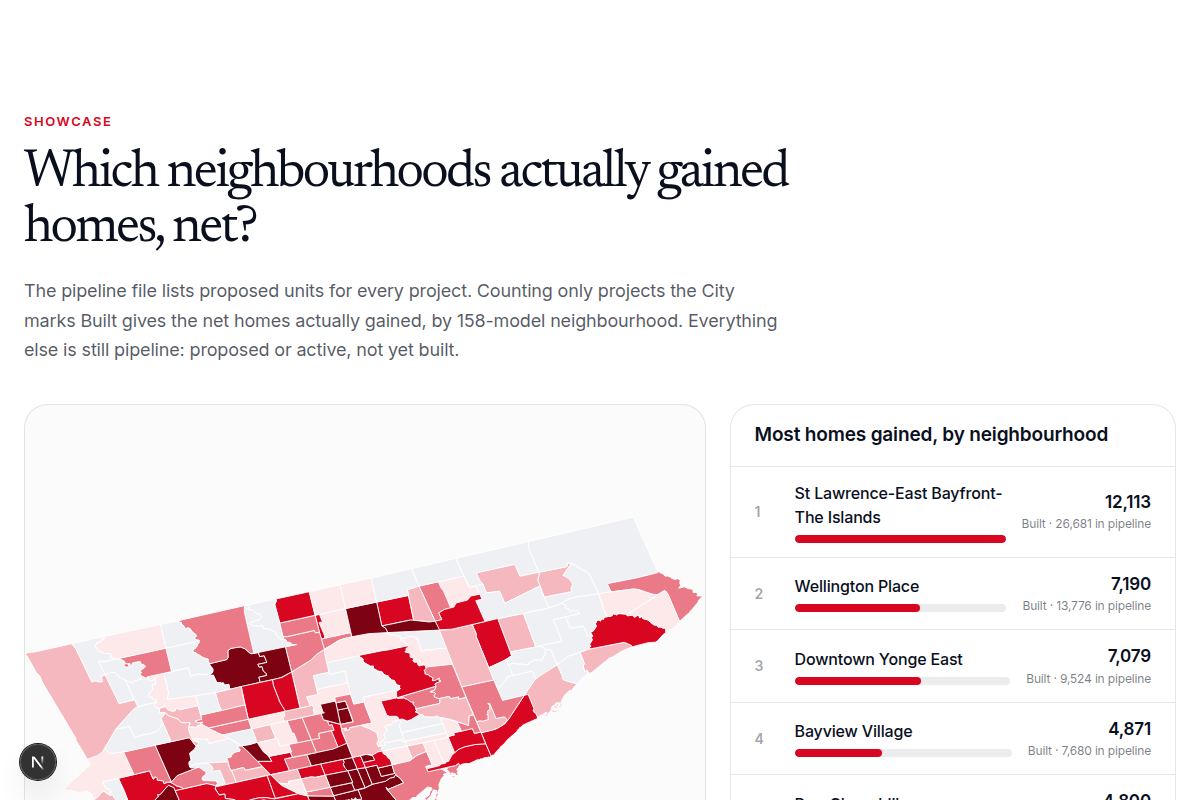
124,326 homes sit in projects the City marks Built: the net homes gained. St Lawrence-East Bayfront-The Islands leads with 12,113.
Explore the data
 Live project
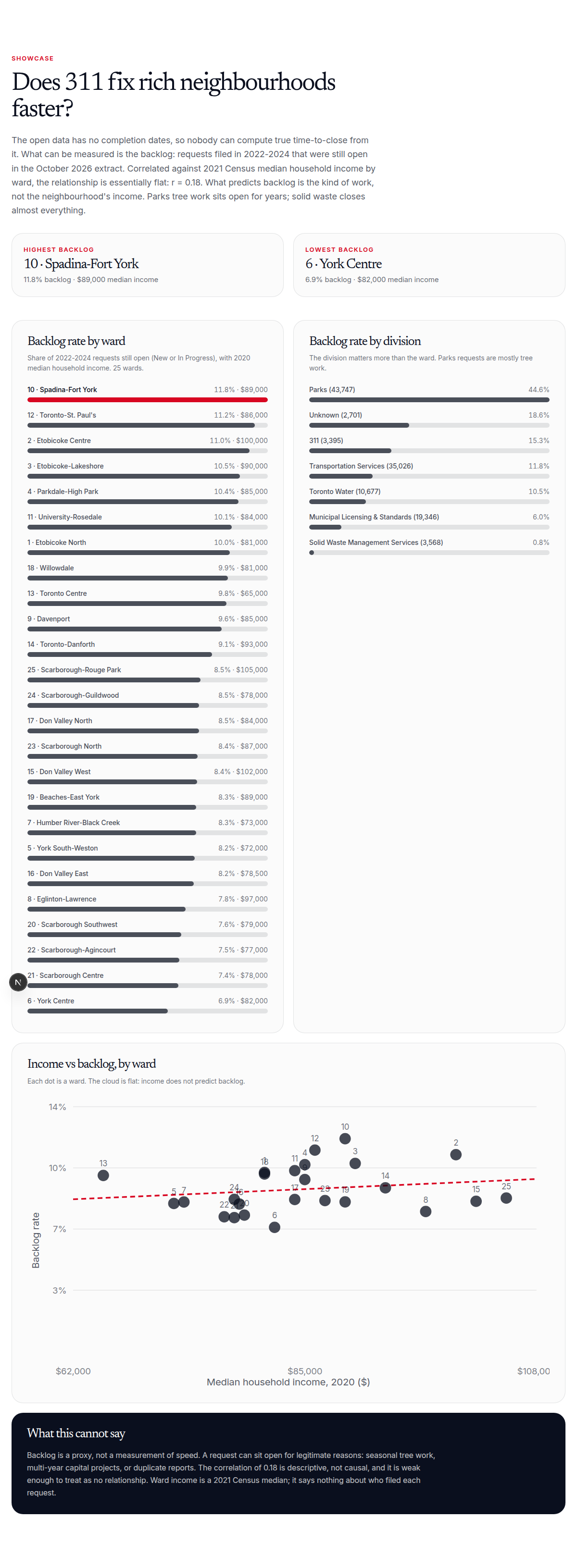
Essentially no: backlog vs ward income correlates at r = 0.18. What predicts backlog is the kind of work, not the income. Parks tree work sits open for years.
Explore the data
 Live project
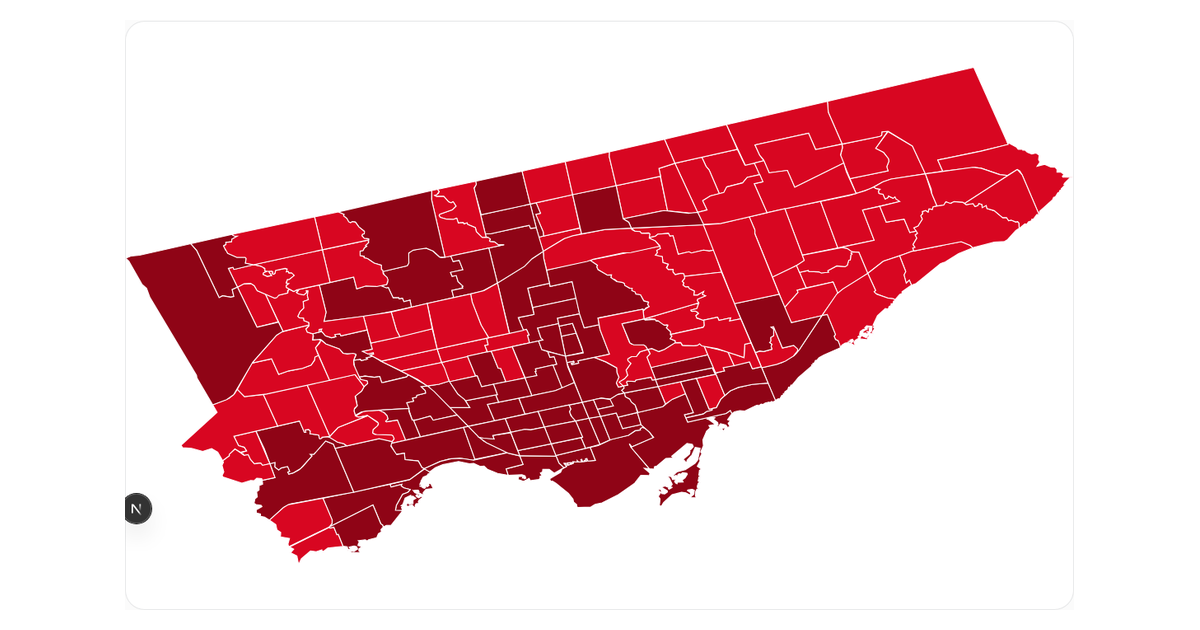
Ward 10 (Spadina-Fort York) takes 14.5% of all tickets; private lots, not streets, are the top infraction at 19.4%.
Explore the data
 Live project
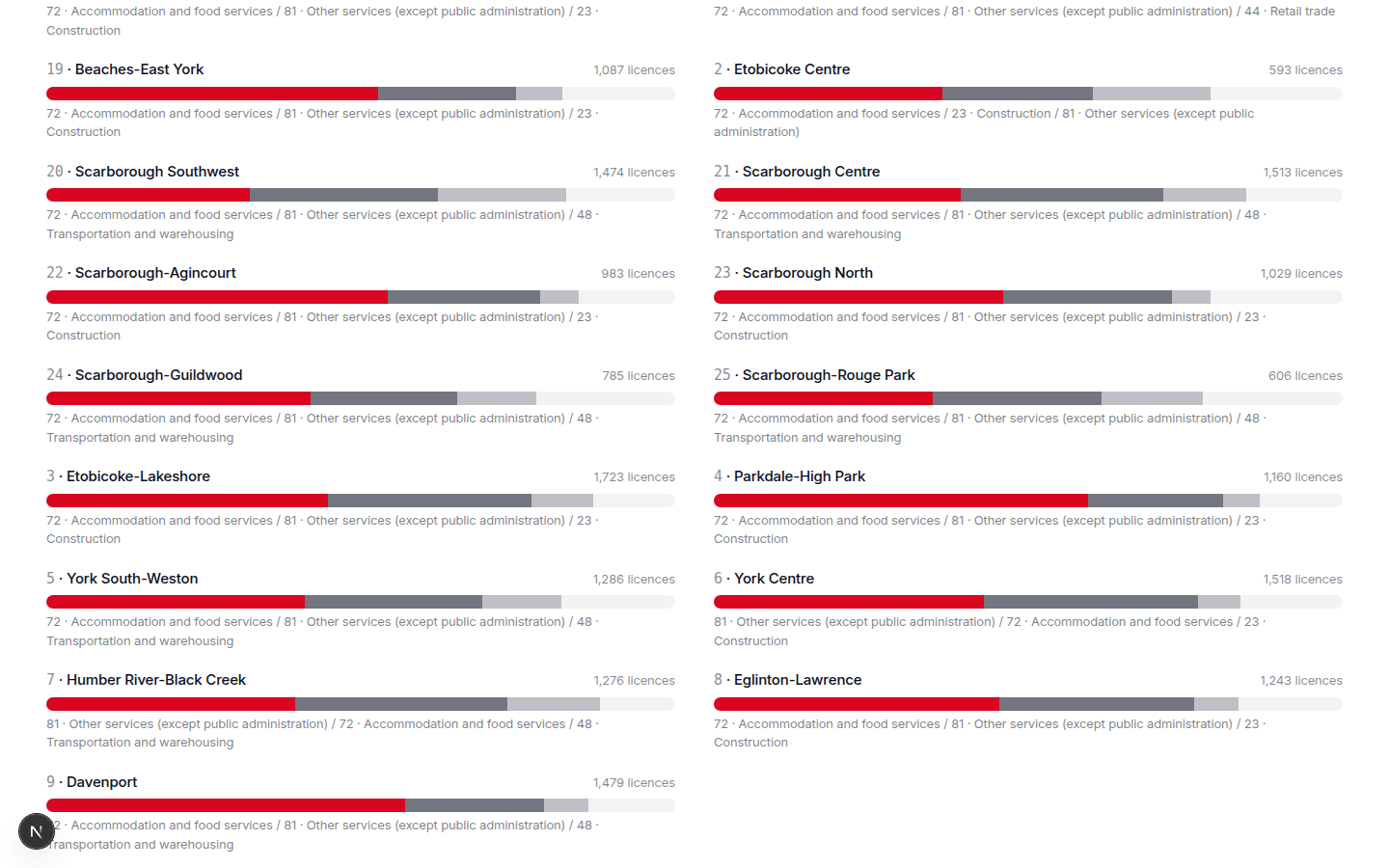
Every Toronto licence mapped to its industry: food services are 43% of active licences, and only Wards 6 and 7 break the pattern.
Explore the data
 Live project
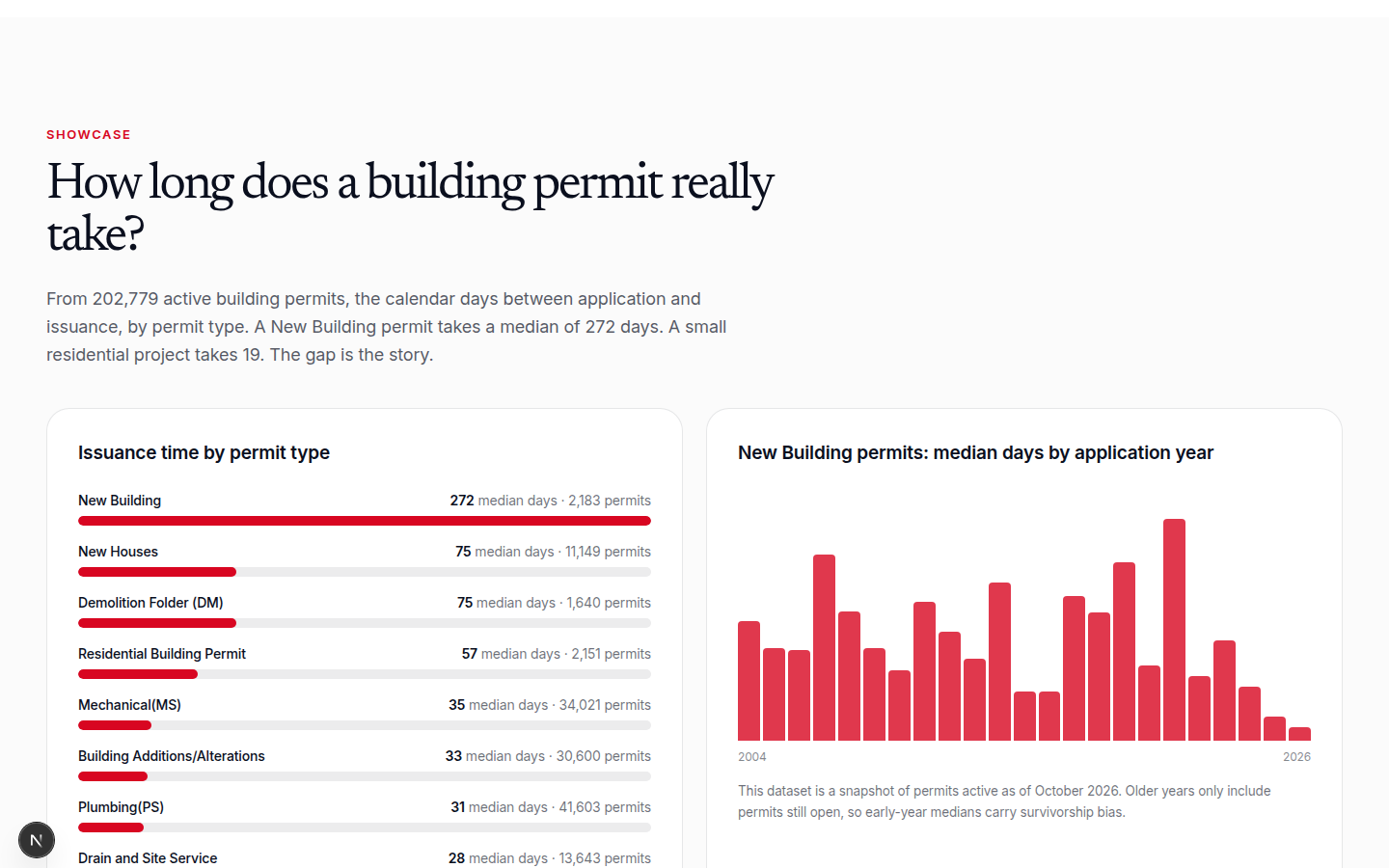
A New Building permit takes a median of 272 days from application to issuance. A small residential project takes 19 days.
Explore the data
Needs: entity-resolved grants
For developers
Every project ships three ways to consume it: a visual explorer, a documented REST API, and MCP tools over streamable HTTP, so AI agents can query the data directly.
One endpoint, one answer.
GET https://canada.nshipyard.com/api/v1/geo/neighbourhood?hood_140=42

{
  "hood_140": 42,
  "hood_158": [43, 44],
  "name_158": ["West Humber-Clairville", "…"],
  "ward_25": 1,
  "cma": 535
}
Open source
Every project lives in its own public repo under the Nshipyard organization: MIT licensed, versioned data releases, open methodology. If publishers clean up their own data, we will happily become redundant.